Symfony 20 year!
This year, Symfony celebrates its 20 year anniversary. Let’s dive into some statistics of years of making web development history.
This post features graphs, with some annotations of things I remember and observe in the graphs. If you find any other interesting stuff, please share it! All data and graphs for this project are on GitHub. Some graph are better viewed in full size, clicking on a graph opens a full size window.
Like many projects at that time, Symfony 1 started with Subversion and a self-hosted code platform at trac.symfony-project.org. During the development phase of Symfony 2, the project moved to Git. To keep the scope of all data extraction for this post manageable, I decided to focus on all statistics starting at Symfony 2.0 and only take the main mono-repository into account.
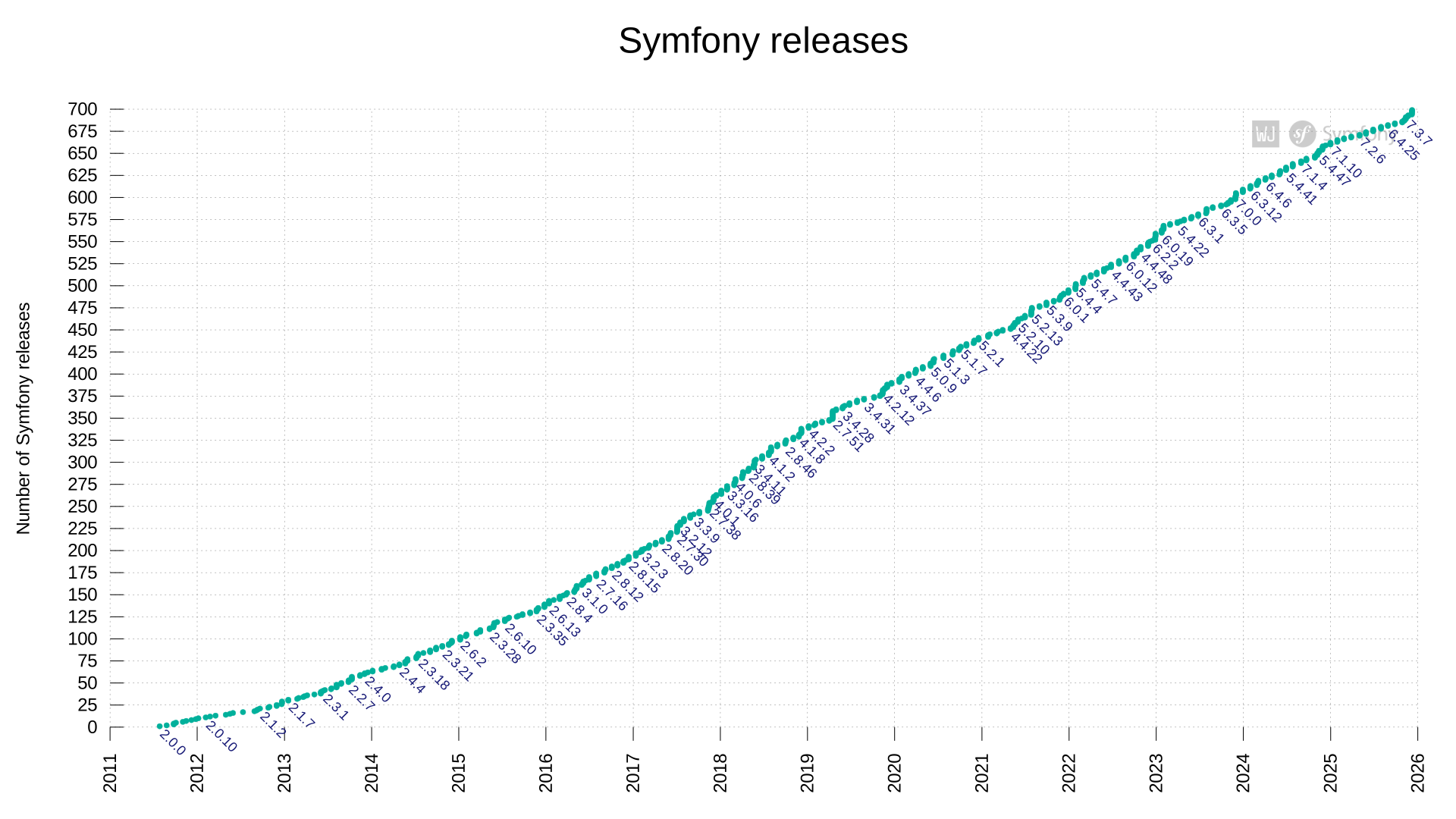
As a start, let’s list all Symfony releases. Today, with 8.0.2 just over a week old, the project has had 699 stable releases (excluding alpha/beta/rc).
At first, the releases were done naturally: Patch releases when enough bugs are fixed, and a minor release when features are stabilized.
In October 2012, Symfony adopted a time-based release process that is familiar to what’s in use today. Symfony started adopting Semantic Versioning, deprecations and smooth upgrade paths. While gaining more experience with these new methodologies throughout the 2.x series, the release cycle changed a couple times.
You can see releases “stacking up” in the graph on the same day, as multiple minor versions were supported at the same moment. This went as crazy as supporting Symfony 2.7 (released in 2015 on PHP 5.3.9!), 2.8, 3.4, 4.0 and 4.1 all at the same time in early 2019. After this, you can see the graph settle at the steady pace we are used to today.
Other statistics in this post are calculated for every “latest” release. For instance, the data is generated for 4.0.0, 4.0.1, etc. until the release of 4.1.0, and then continues with 4.1.1, 4.1.2, etc. Eventhough 4.0 and 4.1 were maintained at the same time, we ignore future 4.0 patch releases.
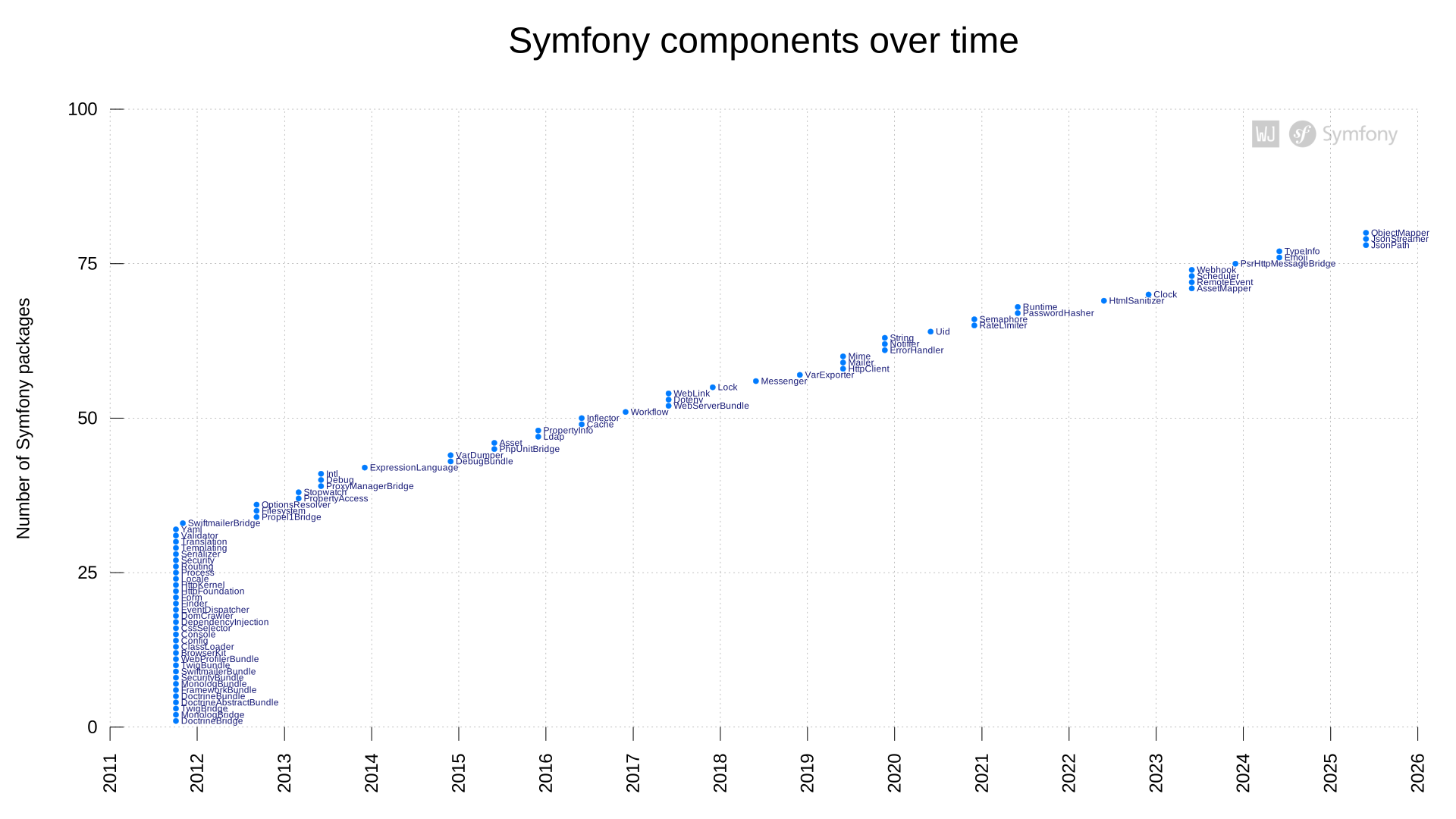
Almost every minor/major Symfony version introduced a new component (excluding component bridges like Mailer integrations). In fact, the latest Symfony 7.4/8.0 release is the 3rd release without a new component!
Symfony 2.0 packaged 32 components, almost tripled with 80 components and 308 total packages in the Symfony 8.0.
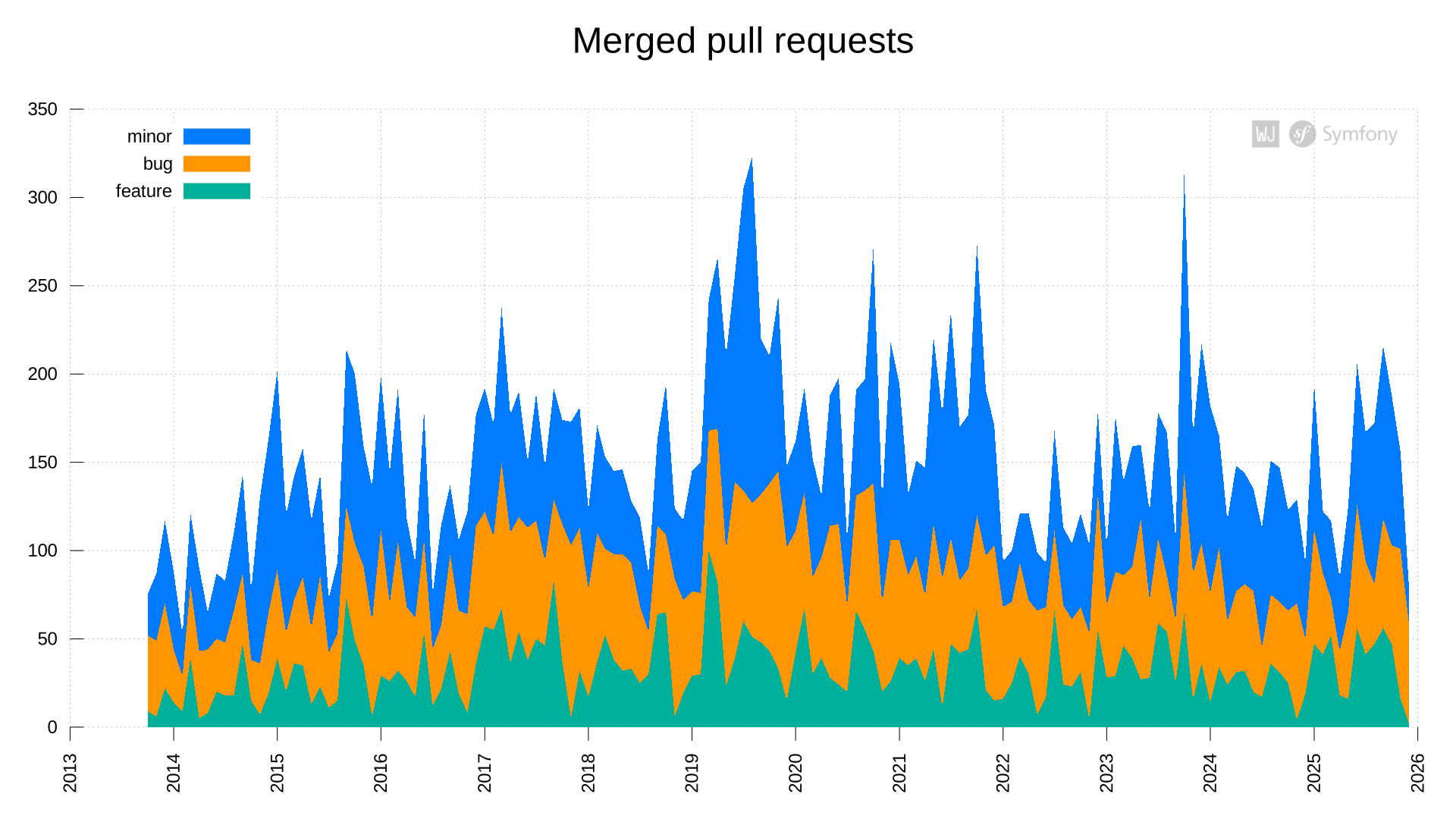
Since the end of 2013, Symfony uses a CLI tool to merge pull request. This labels every merge as “minor” (important work, but not noteworthy in a changelog), “bug” (a fixed bug) or “feature” (new features).
Mapping the merges by type for each months gives a mostly chaotic graph. You can see a big drop in feature merges before the releases in May and November, especially during the release of a new major every 2 years. During this period, the community focuses on stabilizing the existing features and helping the ecosystem with adding support for the new major version.
And one thing is for sure: Activity hasn’t slowed down after 11 years since Symfony 2.0!
Contributors
So who are these people that make Symfony possible? Let’s take a close look at some contributor statistics.
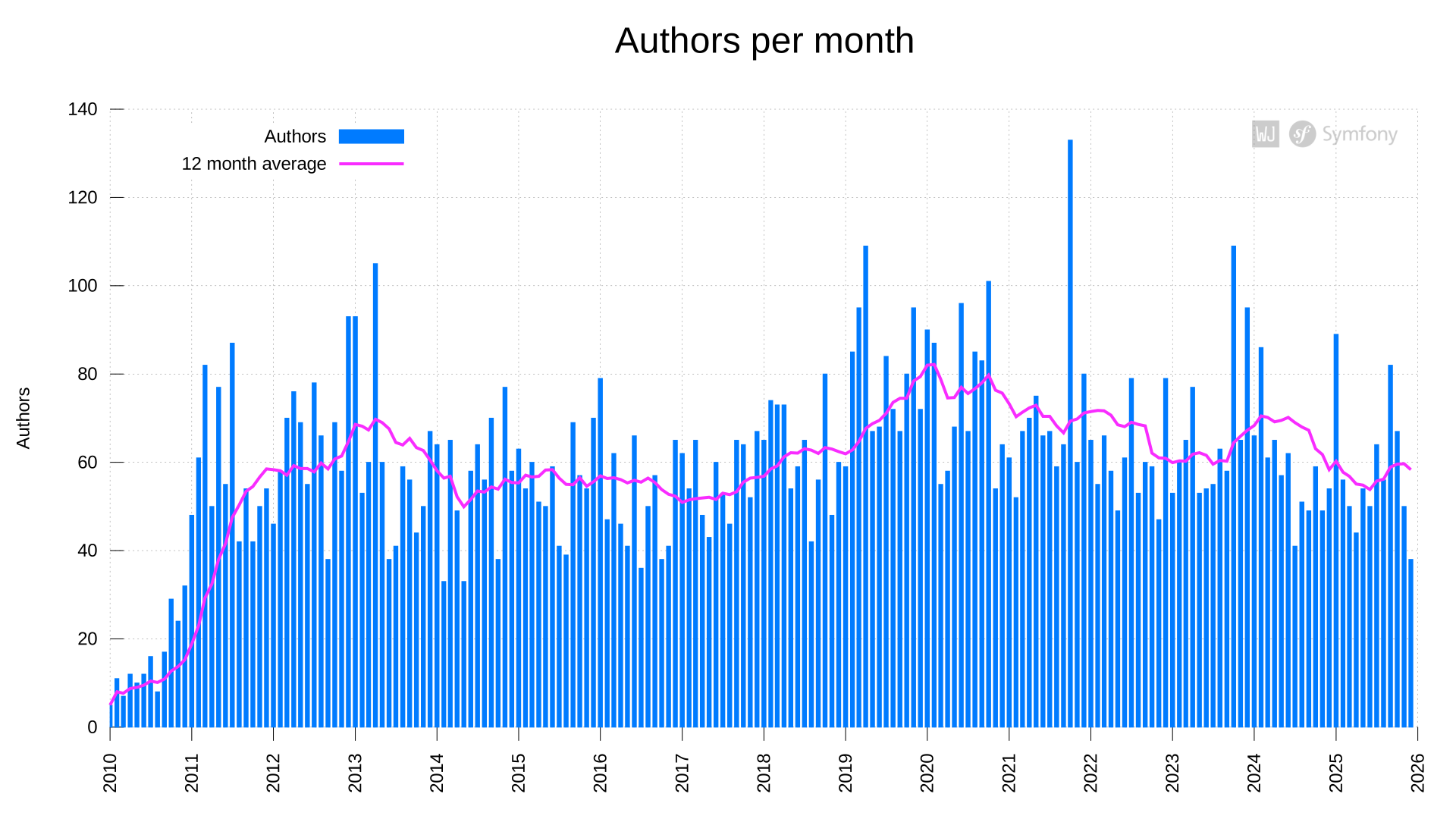
An average of 60 unique authors contribute code to Symfony every month. Over the years, this number has gone up and down but still is pretty stable since 2012.
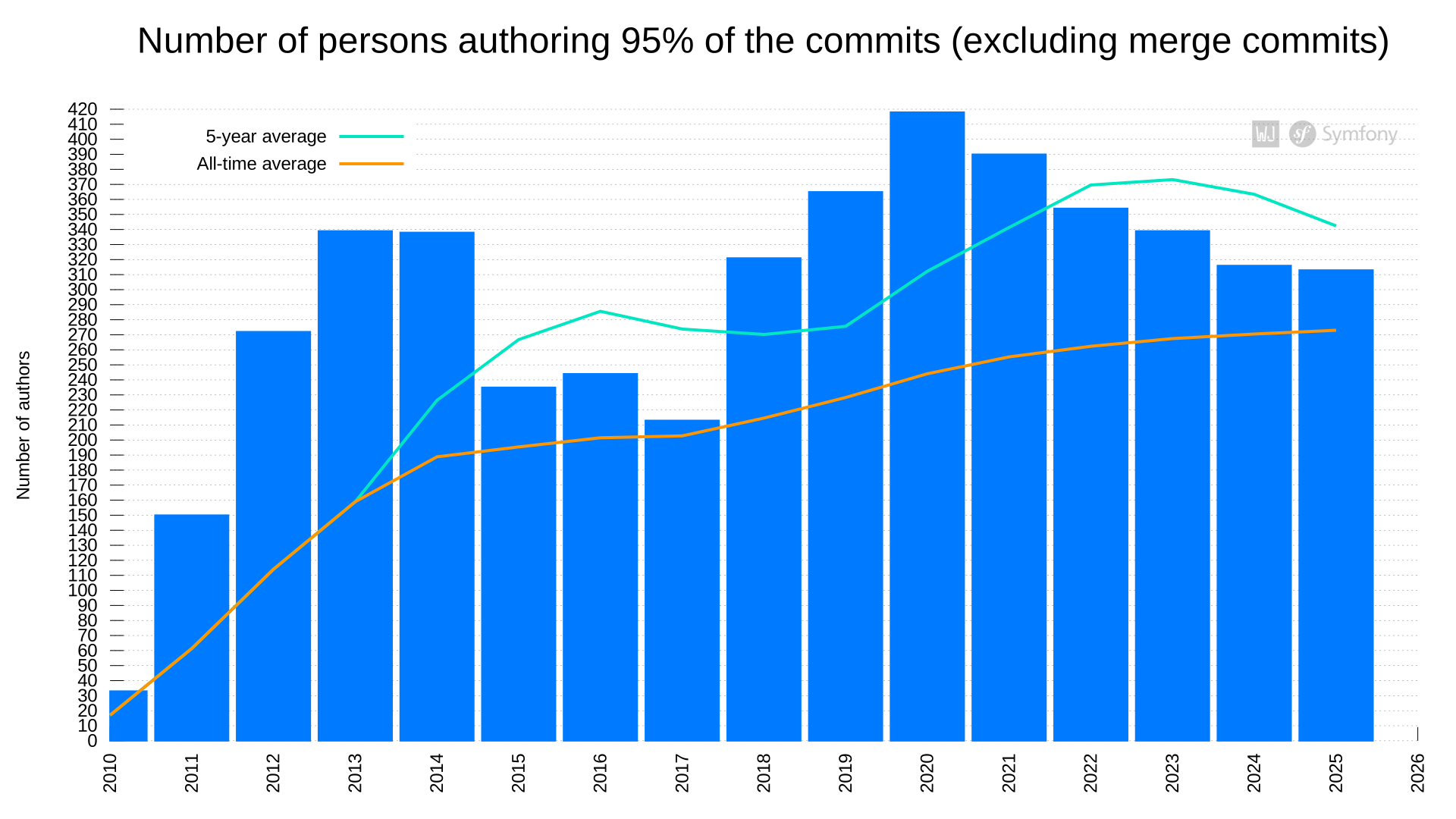
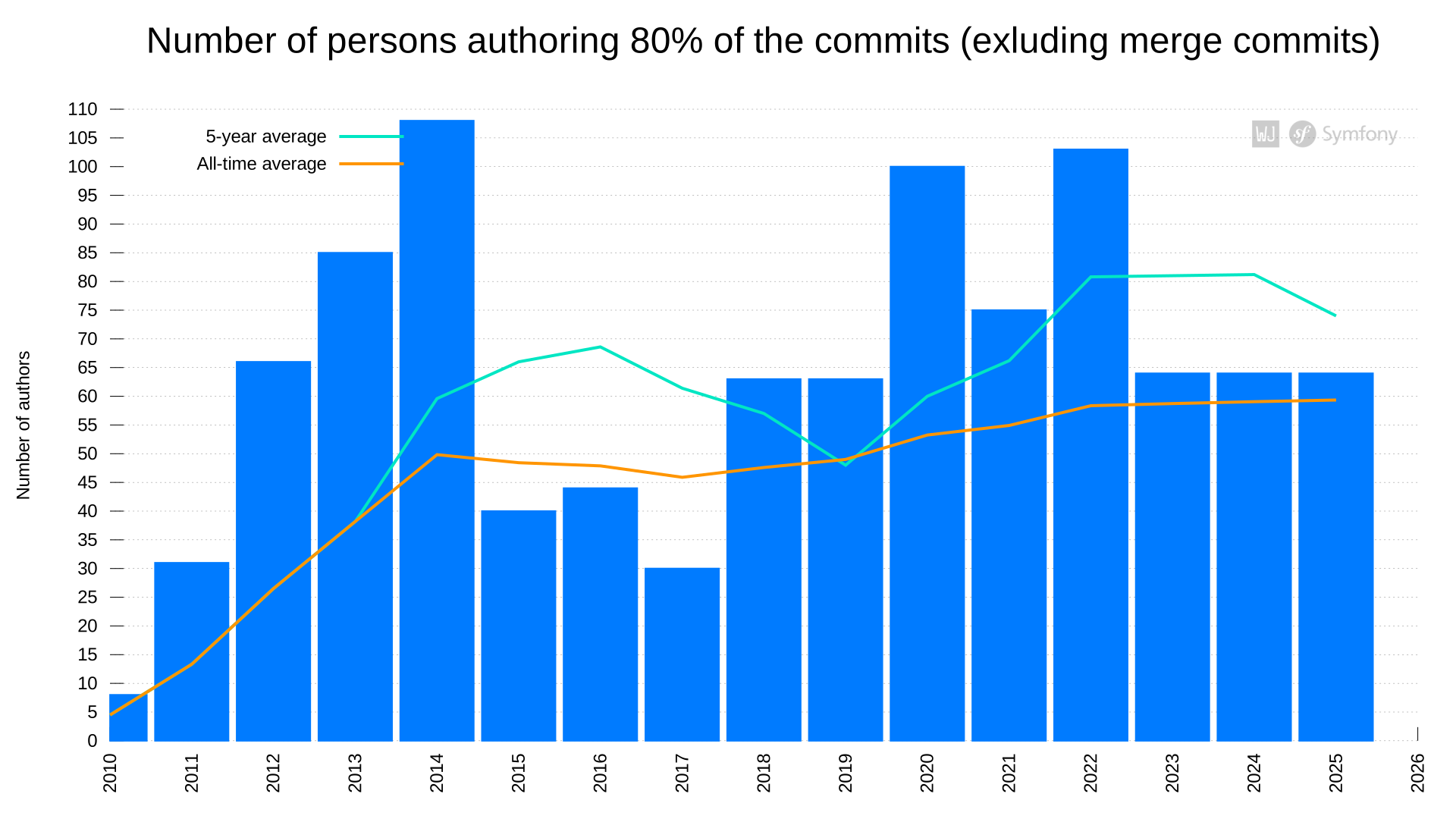
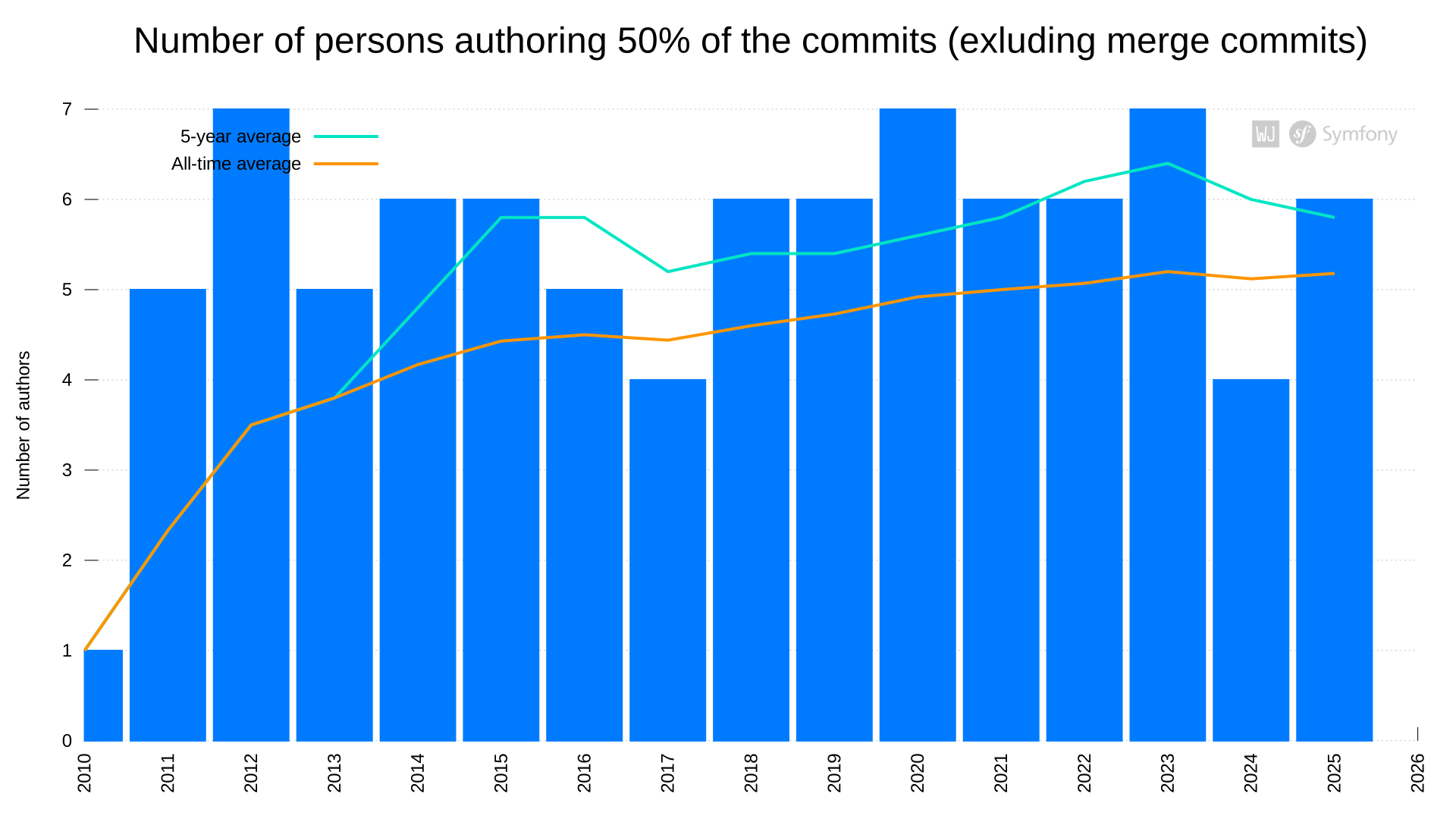
In total, 340 individual contributors own 95% of the commits in 2025. And 6 people are responsible for 50% of the commits for years. This shows the strength of Symfony and its community: It’s not just a couple of contributors doing the work but hundreds of people working together to help everyone move forward!
Interestingly, the peak in 2019-2021 is also visible in the curl project.
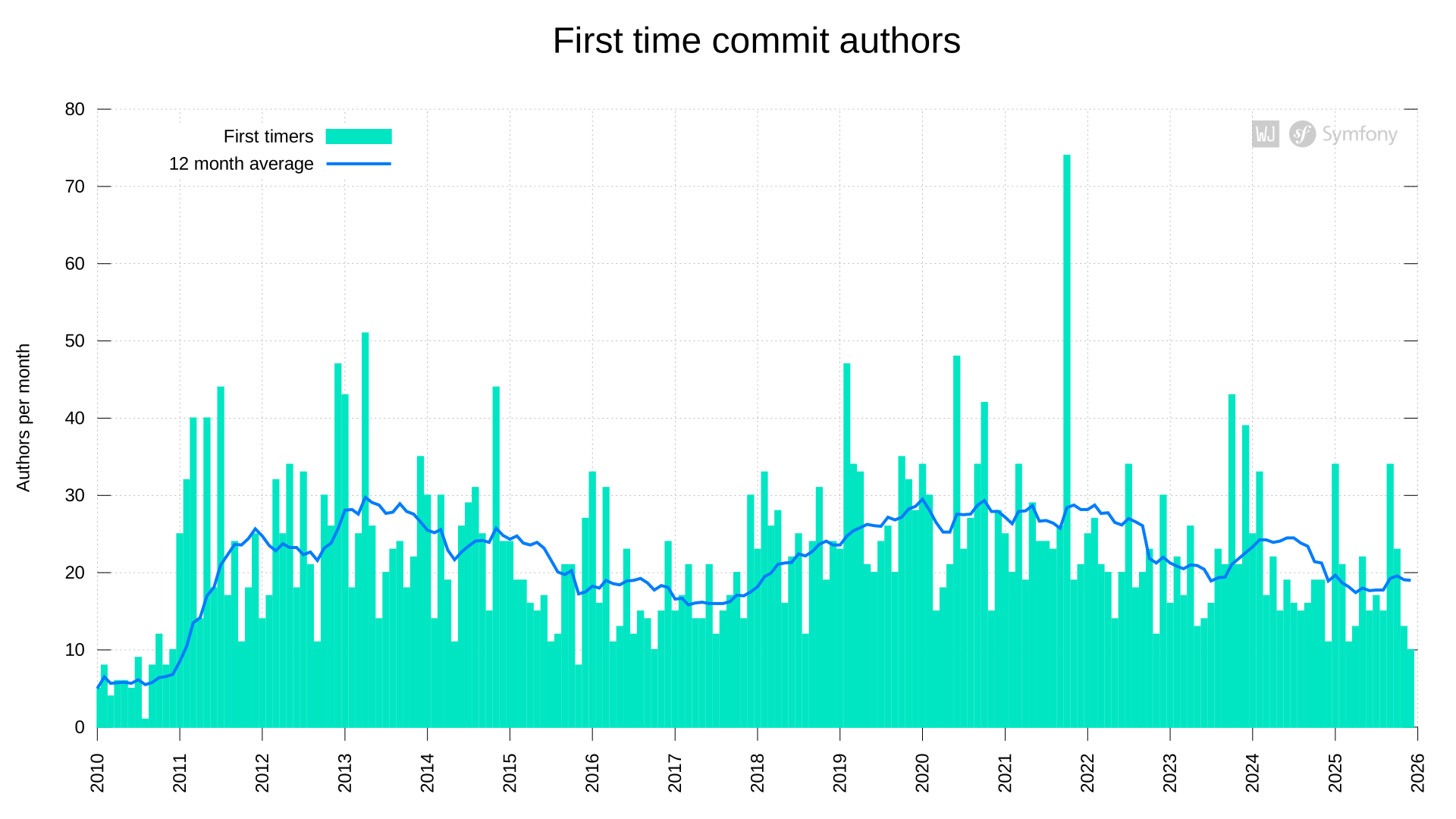
50% of the commit authors every month are new contributors that didn’t commit anything to the project before. It’s amazing to me how many new people keep finding the project and sharing new insights.
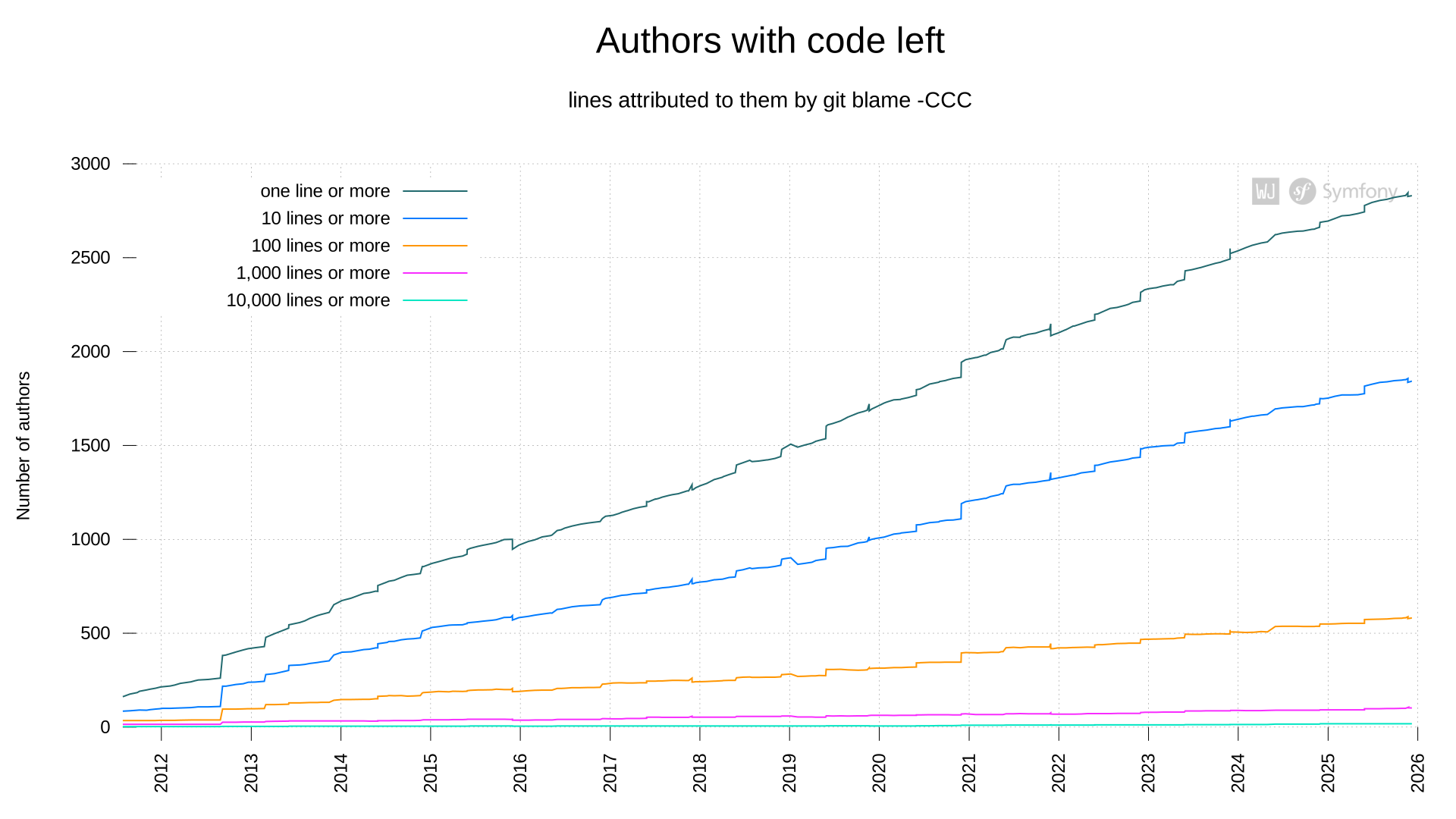
Of all the new work committed every month, how much individual contributors own at least 1 line in the current codebase? As it turns out, the answer to that question is 2820 different authors in 8.0.2! With many authoring more than 10 lines of code.
In Symfony 8.0, 15 authors own more than 10,000 lines in the codebase, with 2 authors more than 100,000 lines of code. Can you guess who they are?
- 129,747 Fabien Potencier
- 119,275 Nicolas Grekas
- 47,490 Bernhard Schussek
- 20,639 Alexander M. Turek
- 19,913 Mathias Arlaud
- 17,385 Alexandre Daubois
- 13,594 Jérémy Derussé
- 13,518 Grégoire Pineau
- 13,104 Wouter de Jong
- 13,057 Ryan Weaver
- 12,654 Kévin Dunglas
- 11,929 Dariusz Rumiński
- 11,689 Oskar Stark
- 11,529 Christian Flothmann
- 11,124 Thomas Calvet
A special memory to Ryan Weaver, who passed away earlier this year after battling with cancer. His legacy will live on in the Symfony community in ways you can’t always describe, but these statistics underline it in ways we can describe.
Code
The contributors bring us to the code itself and by far my most favorite graph of this post!
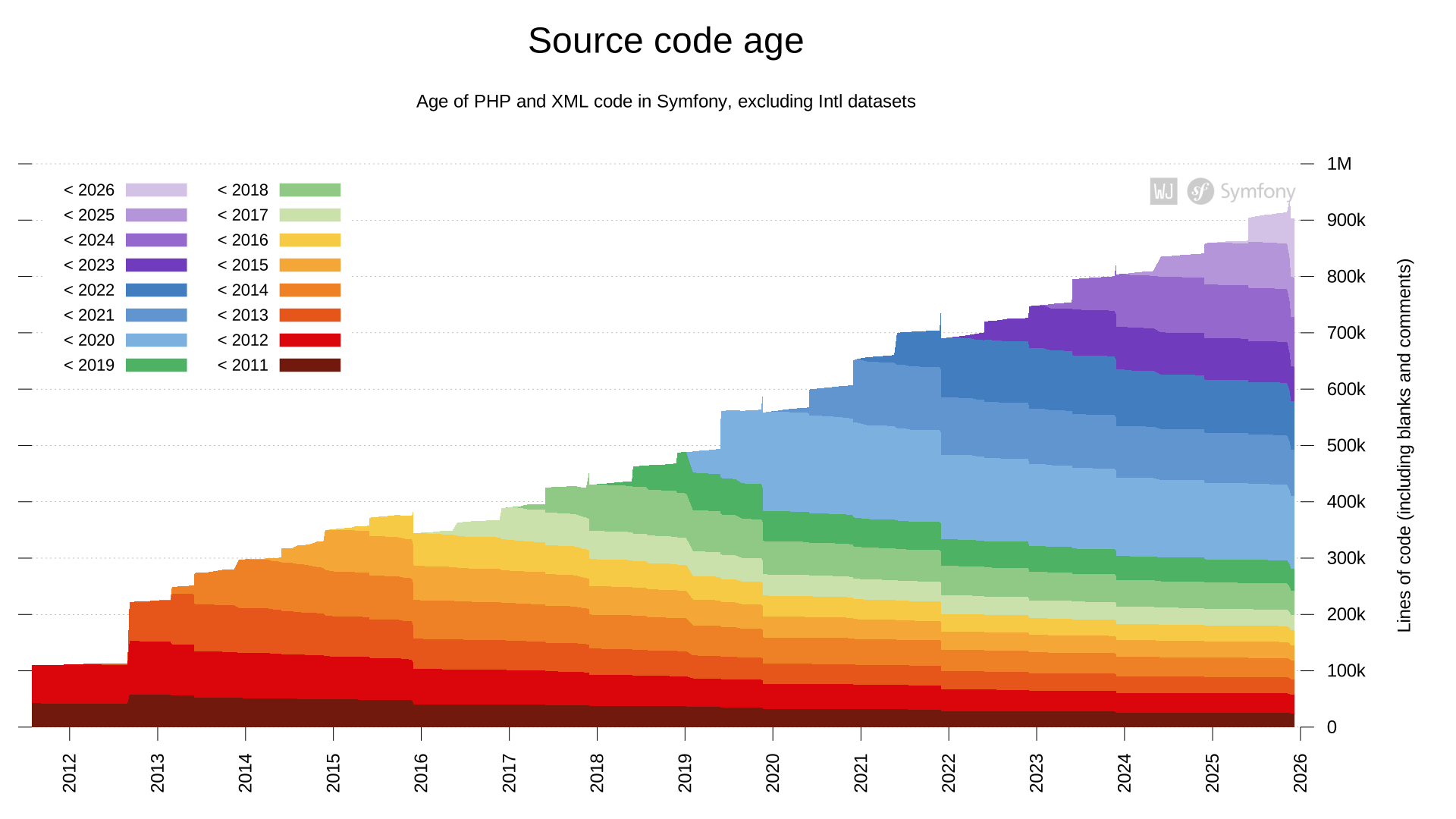
This graph plots how much lines of code written in any year are still untouched in the latest releases. And it contains so many details about the history of the framework!
First, you can see the 2.1 release more than doubling the lines of code of the framework at the end of 2012. This followed a 3 year period of more 2.x releases before releasing 3.0 at the end of 2015.
You can see the rhythmic minor releases every 6 months. Each minor version brings about 50,000 new lines of code to the codebase. With Symfony 4.3 adding the most new lines of code. This release introduced the Mailer, Mime and HttpClient components.
The little peaks every 2 years followed by a steep drop? That’s the x.4 release, immediately followed by the next major release removing all backwards compatibility layers. It surprises me that the total lines cleaned up every major version is worth more or less a full minor version (50k lines!). This shows how crucial this is in keeping the codebase manageable.
The big change of existing lines in early 2019 is the project switching
from oldschool array() syntax to [].
The major version released end of 2021 removed more than a minor release worth of code. This was the removal of the old authentication system from the Security component.
Symfony 8.0 packs 9 times more code than the 2.0 release. Still, thanks to the introduction of Symfony Flex in Symfony 4, you only install the components required for your application.
All in all, more than one third of the code in 8.0 is older than 6 years. This speaks volumes for the maturity of the framework!
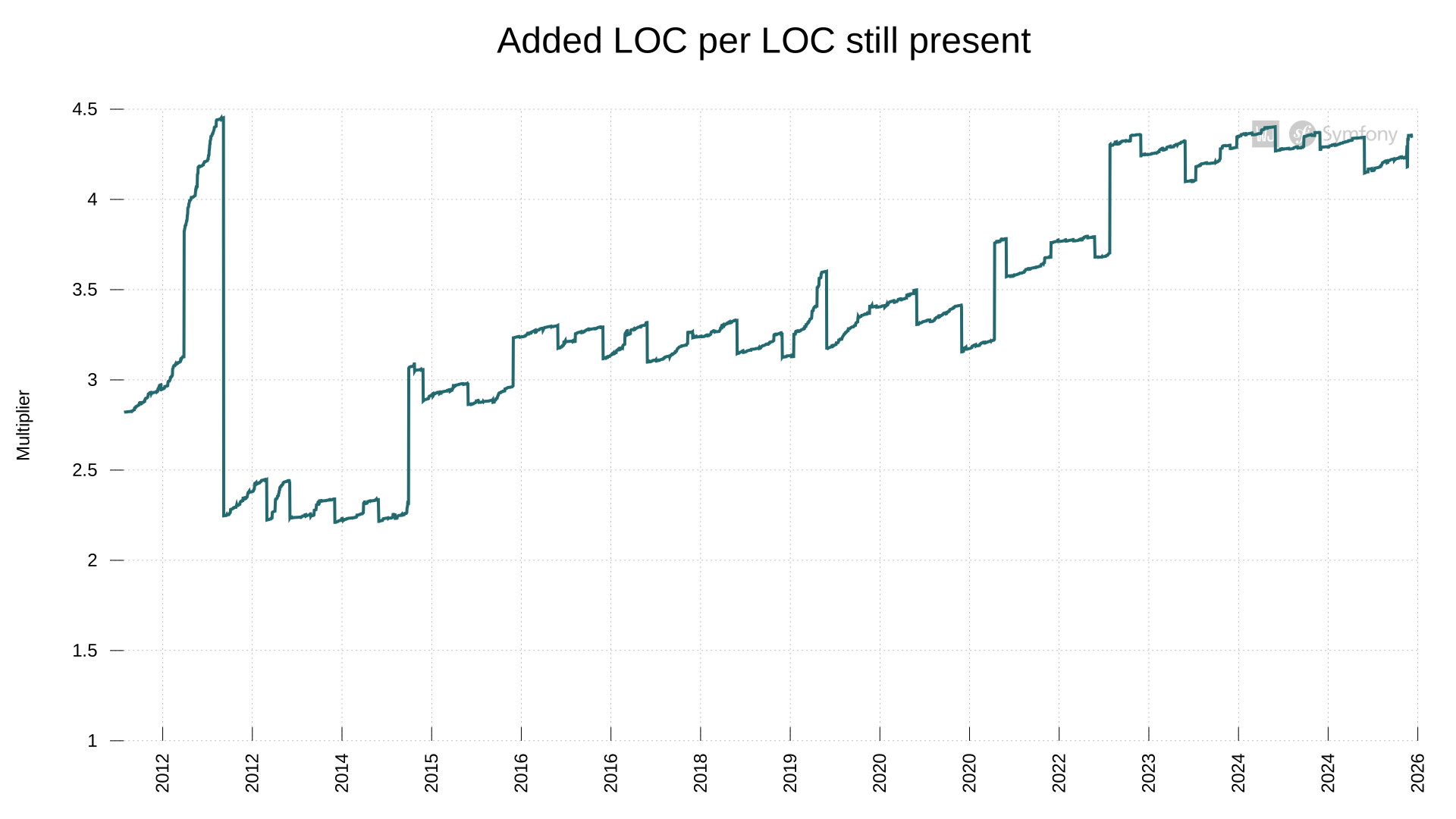
This graph plots of the relation between total lines of code at a specific release, and number of lines added/changed in that release. I must admit to not fully understand what the multiplier exactly means, but it is telling that this number still rises while the codebase is 9 times bigger than at the start.
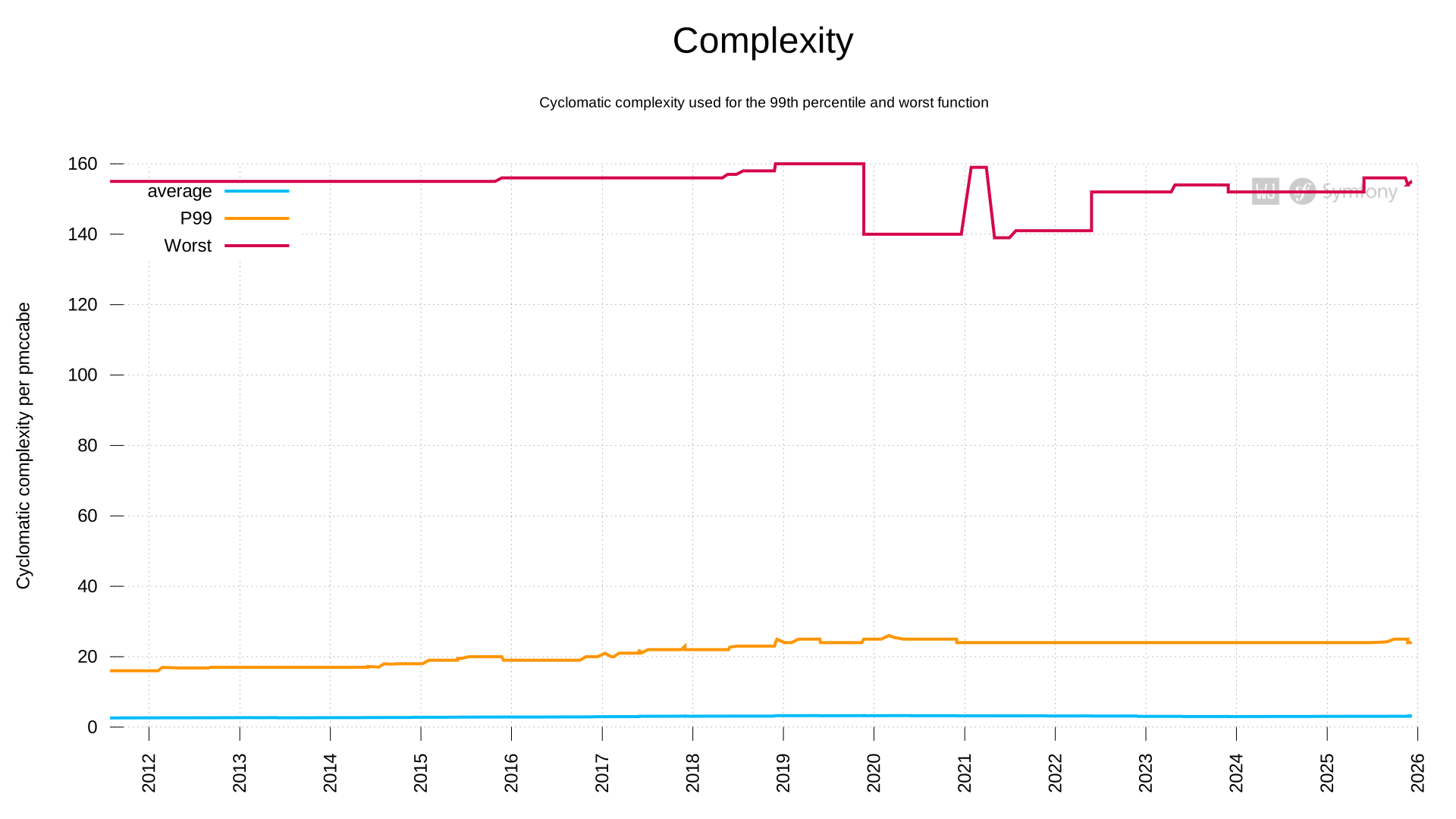
The cyclomatic complexity of the Symfony codebase slightly increases over time, although it remains mostly stable.
It is however interesting to see the evolution of the most complex method in the codebase. For years, the custom pluralization rules in the Translation component topped the list.
Since Symfony 6.1, the Debug Class Loader has taken over. This class is responsible for most of the deprecation reporting for deprecated classes, changed method signatures, return types and new interface methods. Symfony added a lot more deprecation notices to ensure a smooth upgrade path while adding native PHP types to its codebase over the course of three major versions.
Recently, the Redis cache connection has taken over the worst method spot, due to supporting many different Redis extensions/libraries.
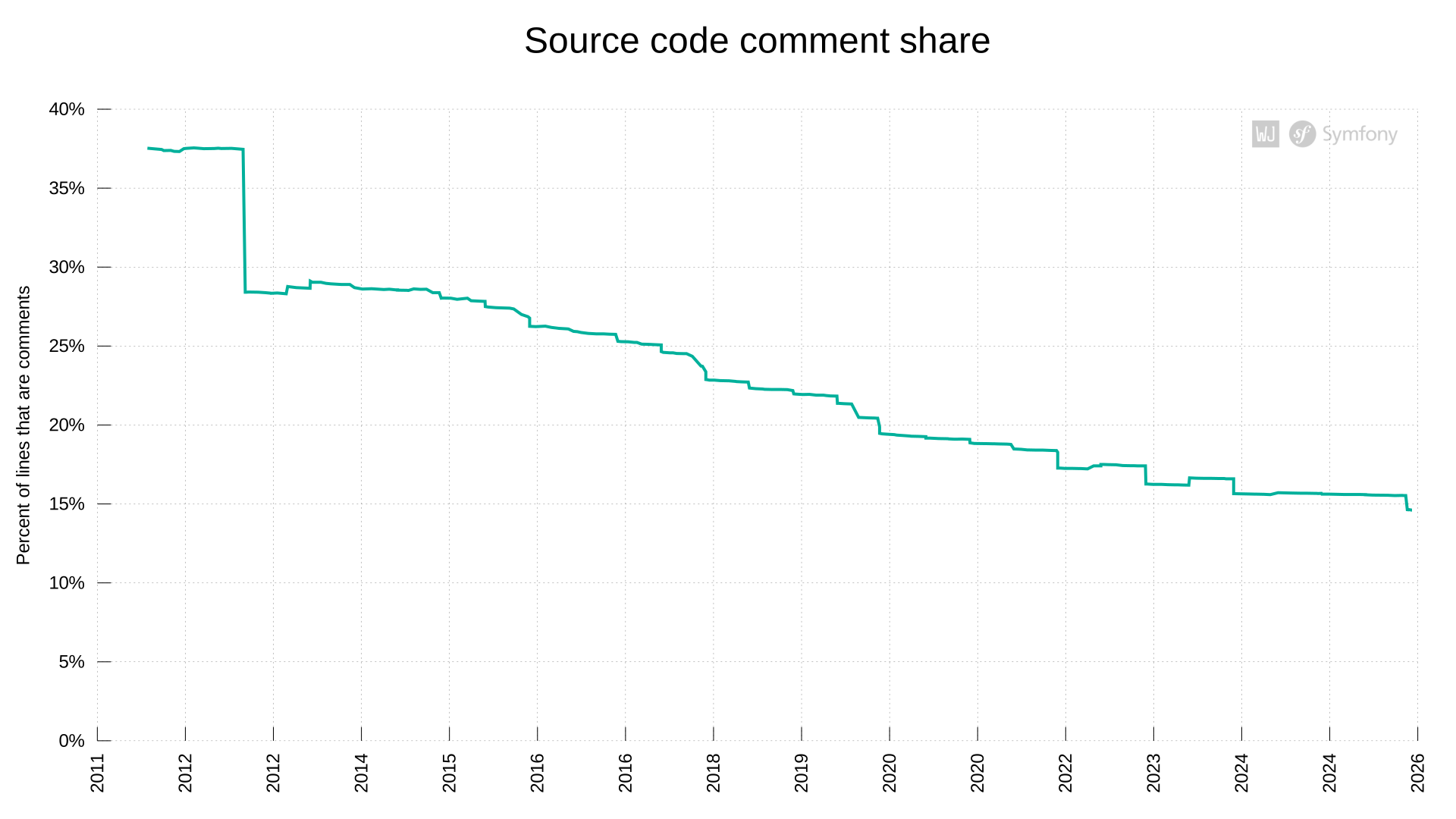
Using a very minimalistic script, I also counted the lines of comment in
PHP files. This includes (multi-)line doc comments, and full line comments
starting with // or #.
In 2.0, almost 40% of the lines of code were comments. This was in part due
to “Captain Obvious” PHPdoc comments like “Constructor.”
at every __construct() method. Symfony also used to have a convention of
adding PHPdoc comments containing only {@inheritdoc} when overriding a
parent method. Over the years, practices changed the share of comments
decreased.
Lately, the introducing of PHP native types and attributes helped making even more comments redundant.
Of course, comments also add useful context to lines of code. Maybe this is a metric we should focus on getting higher again in 2026!
Documentation
That brings us to my favorite corner of software: Documentation. We’ve seen the Symfony codebase grow immensely over the years, how does the documentation compare with this?
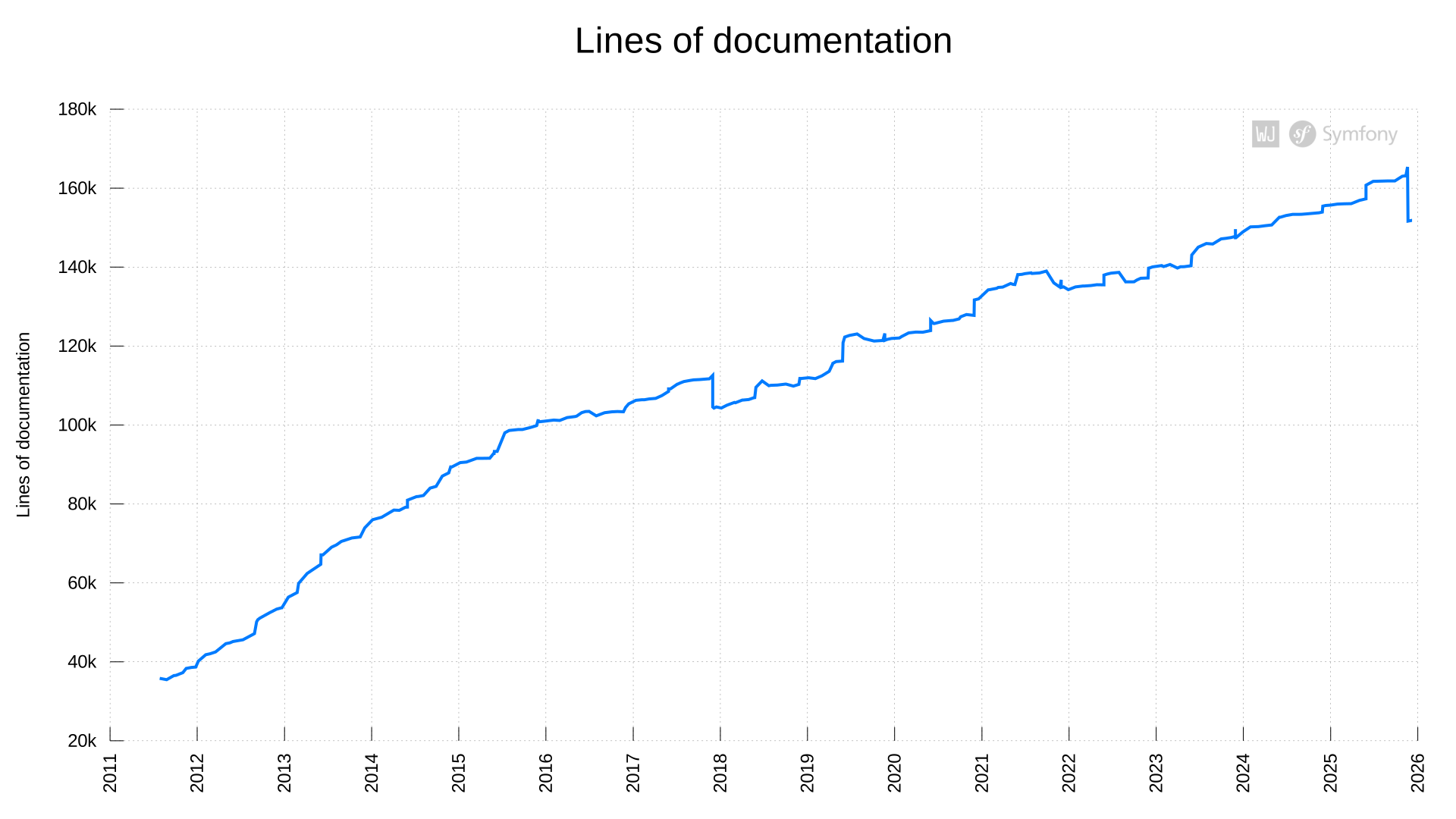
While not as fast as the codebase, the Symfony documentation has grown an incredible 4 times since the initial 2.0 release. This is an impressive statistic, given the limited size of the documentation team and contributors. Still, the documentation GitHub repository is one of the top active projects (for instance double the amount of contributors compared to React).
Also interesting to see some of the drops in lines of documentation with major releases. With the removal of XML and PHP Config Builder configuration formats in Symfony 8.0, a lot of code examples and documentation could be removed from the documentation. This not only reduces the size of the documentation, but also improves developer experience!
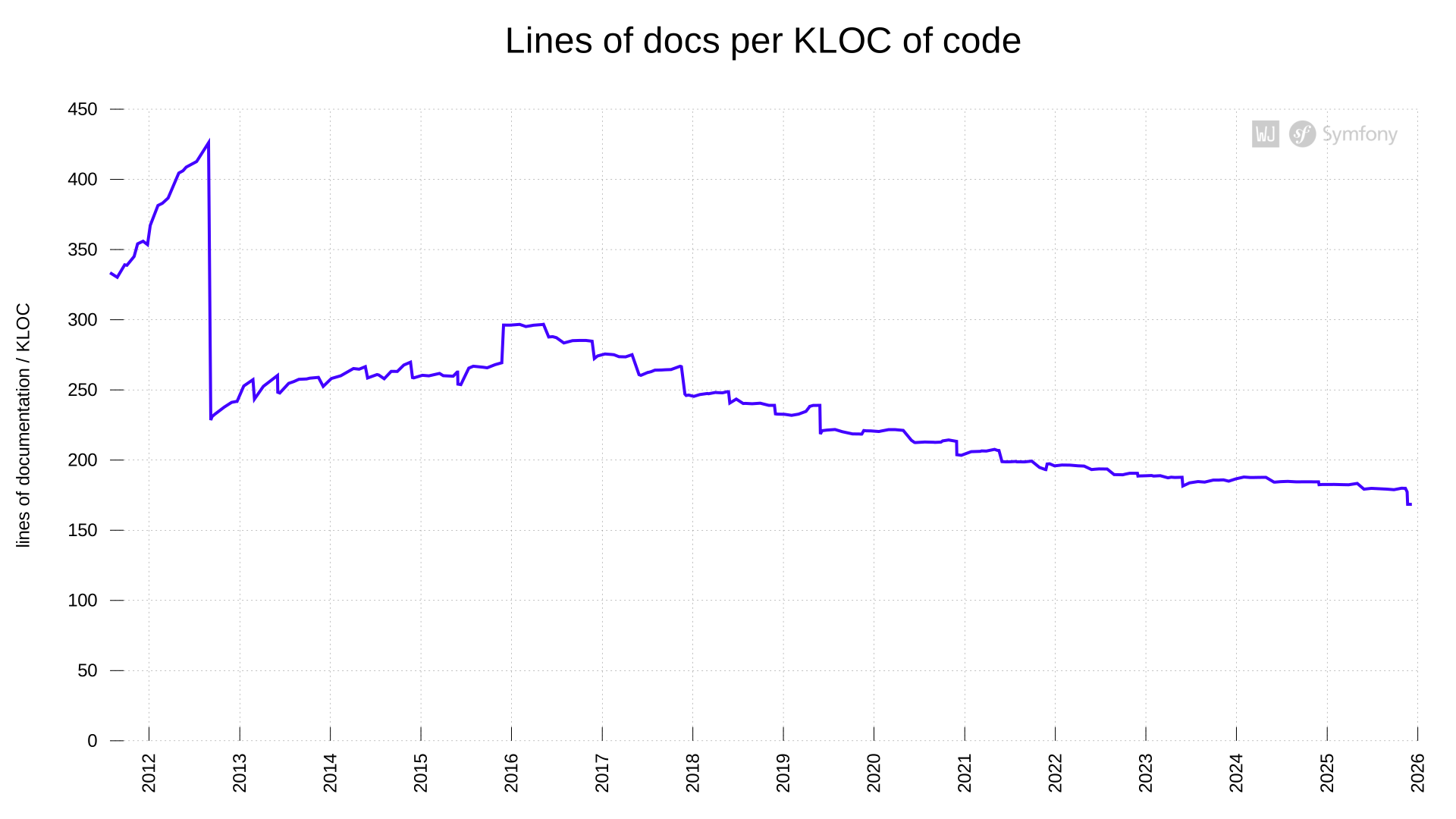
It is also interesting to compare the number of documentation lines with 1,000 lines of Symfony code.
The initial release had relatively the most documentation, rapidly dropping when Symfony 2.1 doubled its code size at the end of 2012. In 2016, the documentation team reorganized the docs from books & cookbooks to the guides we have now. Since then, this metric has been slowly decreasing but mostly stable.
Less documentation does not have to be a negative metric. Over the years, the documentation team has gained tons of experience in writing more concise and favoring code examples over large walls of text.
Conclusion
A huge congrats to Fabien for driving the Symfony project forward for 20 years. If these graphs proofed me anything, it is that the Symfony community has evolved over the many years and still is buzzing everywhere!
If you have more ideas on data to investigate, or want to try out my (very hacky) scripts on other projects, go over to the scripts on GitHub. But be warned: the scripts may break at any time and running them can take a loooong time.